
"coffee plant development"
10000 article(s) found

Yunnan Coffee beans pirated Pu'er Tea Crazy
From selling and hoarding, to selling at a low price, and then to Nestl é suspending acquisitions, the coffee growing craze has gradually sobered up because of this sudden harvest stoppage. Apart from being sober, a reflection on the coffee industry in Yunnan has more practical significance.

Introduction to Yunnan Coffee single Bean Flavor description Variety planting Development History of producing area treatment Manor
Communication of professional baristas Please pay attention to Coffee Workshop (Wechat official account cafe_style) Yunnan is located in the subtropical mountain climate zone south of the Tropic of Cancer, with unique plateau red soil, rich and loose soil, mild climate, especially suitable for growing small seed coffee, where you can grow the best coffee in the world. A brief introduction to Coffee in Yunnan Lujiangba in the dry and hot valley of the best coffee producing area in China is
Booming Coffee Industry in Pu'er City
Pu'er City is located between 22 degrees 02 to 24 degrees 50 minutes north latitude and 99 degrees 09 minutes to 102 degrees 19 minutes east longitude. Passing through the Tropic of Cancer, Pu'er City is a plateau climate zone with low latitude and humid monsoon climate in the south subtropics. It is in the same latitude as the world-famous coffee growing area Colombia, which is the golden zone of coffee cultivation.

The Development of Fine Coffee in Yunnan, China how to plan for the future small-grain coffee is not the only way out
Professional coffee knowledge exchange more coffee bean information please follow the coffee workshop (Wechat official account cafe_style) Chinese coffee Yunnan Yunnan is one of the earliest provinces in China to grow coffee. At the end of the 19th century, missionaries from Europe went to Yunnan Dali and other places to preach, bringing coffee seeds to Yunnan. In the early stage after liberation, Lujiangba in Baoshan was successfully planted, and it was found that the adaptability was good.

Development status of Dehong Coffee Industry _ cultivation of Dehong Coffee _ what is the quality of Dehong Coffee
Professional coffee knowledge exchange more coffee bean information Please pay attention to the coffee workshop (Wechat official account cafe_style) the unique natural conditions of Dehong Prefecture have created the outstanding quality of small grain coffee, its rich and mellow flavor, unique flavor, by Nestl é, Starbucks and other international famous coffee merchants as one of the best quality coffee in the world. The planting situation of ● Dehong is introduced in China

Yunnan coffee bean variety flavor description history, present situation and development prospect
The exchange of professional baristas please follow the coffee workshop (Wechat official account cafe_style) two classic high-quality coffee varieties Typica and Bourbon are the main varieties of coffee in Yunnan. In 1991, the Katimo Catimor series were introduced from Kenya (more resistant to virus and higher yield). Arabian species (

Yunnan Hougu Coffee is mired in debt crisis and its listing plan is stranded.
As the largest coffee enterprise in Yunnan Province, Hougu Coffee fell into the debt crisis again after the dispute over the ownership of investors. The gap between the two is only two years, making Hougu Coffee's listing plan stalled again. Hougu Coffee's dream of sprinting the first share of Chinese coffee had to be extended again. Prosperity and loneliness always go hand in hand. As the leading enterprise of coffee industry in Yunnan Province

Steadily promoting the Scientific Development of Pu'er Coffee Industry
The cultivation of coffee in Pu'er City has a history of about 150 years, and it is regarded as the area with the largest coffee planting area, the best coffee planting environment, the best coffee quality, the largest coffee output and the most promising coffee industry in China.
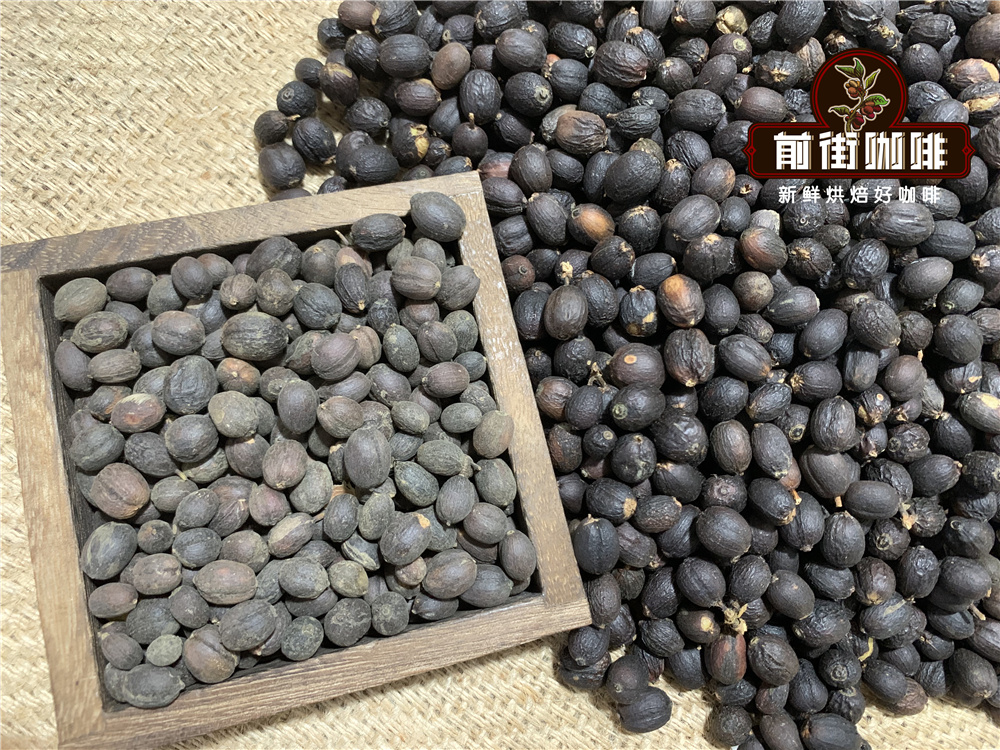
Yunnan Coffee Bean Variety Yunnan Coffee producing area History Story description of flavor and taste characteristics of 2013 small grains of coffee in Qianjie
For the future, local governments in Yunnan have also drawn a blueprint: Dehong is planning to expand the coffee planting area from the current 100000 mu to 200000 mu in the next few years; Lincang plans to expand the existing 20, 000 mu coffee forest by 10 times to 200000 mu in the 12th five-year Plan; Pu'er also plans to expand the 220000 mu coffee forest to

A brief introduction to the planting and Development of Katim Coffee Bean Flavor description area
Following Cafe (Wechat official account vdailycom) found that Beautiful Cafe opened a small shop of its own, Catimor: in 1959, the Portuguese mixed Brazilian Kaddura with Timo to produce a disease-resistant Katim / Katimo, which is now an important variety of commercial beans. Katim is a variety introduced later, with a relatively stable yield and strong resistance to diseases and insect pests.

A brief introduction to the History and Culture of the Origin and Development of Vietnamese Fine Coffee beans
At present, the development plan of coffee industry in Vietnam is adjusting its strategic direction according to the following main contents: 1. Change the planting structure and determine the strategic goal of industry development. Reduce the planting area of ROBUSTA coffee and turn the land with low efficiency in coffee cultivation into other perennial cash crops such as rubber, pepper, fruit trees and annual crops such as cotton and hybrid corn. In conditional land

Description of Geographical Characteristics of Yunnan Zuoyuan Water-washed Yellow Bourbon Planting Area Introduction of Yunnan Coffee Development
Professional coffee knowledge exchange More coffee bean information Please pay attention to coffee workshop (Weixin Official Accounts cafe_style) Bourbon species grown at high altitude, usually have better aroma, at the same time acidity is brighter, drink even similar to red wine flavor. Bourbon is a coffee tree, a branch of the Arabica species, usually bearing red fruit called

When was coffee introduced into China? How does coffee spread to China? The development of coffee in China
The history of the introduction of coffee into China is not long, and it was not until 1884 that coffee was first planted in Taiwan Province. In the mainland of the motherland, the earliest coffee cultivation began in Yunnan. At the beginning of the 20th century, French missionaries brought the first batch of coffee saplings to Binchuan County, Yunnan Province, and began to grow coffee in the mainland. Chinese people have been drinking tea for thousands of years.

What is the boutique coffee in China, the development history of Yunnan coffee, is Yunnan coffee beans delicious?
Yunnan, as the main coffee producing area in China, what special flavor does it have? In recent years, Yunnan coffee beans stand out in the raw bean competition and become a group of dark horses to enter the boutique coffee market, so what is the unique charm of Yunnan coffee? What kind of story does it have? The first Yunnan coffee beans were introduced by Tian Deneng, a French Catholic missionary, via Vietnam in 1904.

Yunnan coffee growing area where is Yunnan suitable for growing coffee? what are the famous manors of origin?
Professional coffee knowledge exchange more coffee bean information please follow coffee workshop (Wechat official account cafe_style) Yunnan Coffee, Rubiaceae, Coffee Genus, planting areas are mainly distributed in Lincang, Baoshan, Simao, Xishuangbanna, Dehong and other prefectures. Small grains of coffee are native to Ethiopia or Arabian Peninsula. It is cultivated in Fujian, Guangdong, Hainan, Guangxi, Sichuan, Guizhou and Yunnan.
Yunnan coffee industry development policy Yunnan coffee brand promotion
People's governments of various states and cities, provincial committees, offices, departments and bureaus: in order to thoroughly implement the relevant arrangements of the provincial party committee and provincial government to promote the development of key industries, promote the healthy development of the coffee industry in the province, and speed up the promotion of the coffee industry to become bigger and stronger, with the consent of the provincial people's government, we now put forward the following suggestions: first, the overall requirements (1) the guiding ideology for the comprehensive implementation of the 18th CPC National Congress and the 10th CPC National Congress

Introduction to the spread and Development of Coffee in China
The spread and development of coffee in China the history of coffee introduced into China is not long. It was not until 1884 that coffee was first planted in Taiwan. In the mainland, the earliest coffee cultivation began in Yunnan. At the beginning of the 20th century, French missionaries brought the first batch of coffee saplings to Binchuan County, Yunnan Province, and coffee began to be grown on the mainland. In terms of natural conditions, many parts of our country and

Yemeni coffee flavor and taste Yemeni coffee brands are introduced in Yemeni boutique coffee beans.
Since 2001, Yemeni coffee production has declined year by year due to various reasons. The annual output has dropped from 11906 tons in 2001 to 11608 tons in 2003, 11590 tons in 2004, to about 11000 tons in 2008. In recent years, despite the rising prices in the international coffee market, the coffee industry in Yemen has not boomed, but has shrunk sharply. The main reason for the decrease in coffee production

A brief introduction to the History and Culture of the Origin and Development of Katim's Fine Coffee beans
Many chopped beans, adzuki beans and bad beans still have a lot of defective beans after drying, so we hand-picked them on the spot and finally left 9 kilograms of qualified beans. By this time, most of the morning has passed, of course, if it is used to make instant coffee or general commercial beans, high-yield catimor is a good choice, but if you want to find Yunnan specialty coffee, then

Development status of Mocha Coffee in Yemen
(1) the total output has continued to decline in recent years since 2001, and Yemeni coffee production has declined year by year due to various reasons. The annual output has dropped from 11906 tons in 2001 to 11608 tons in 2003, 11590 tons in 2004, to about 11000 tons in 2008. In recent years, despite the rising prices in the international coffee market, the coffee industry in Yemen has not boomed with it, but sharply.